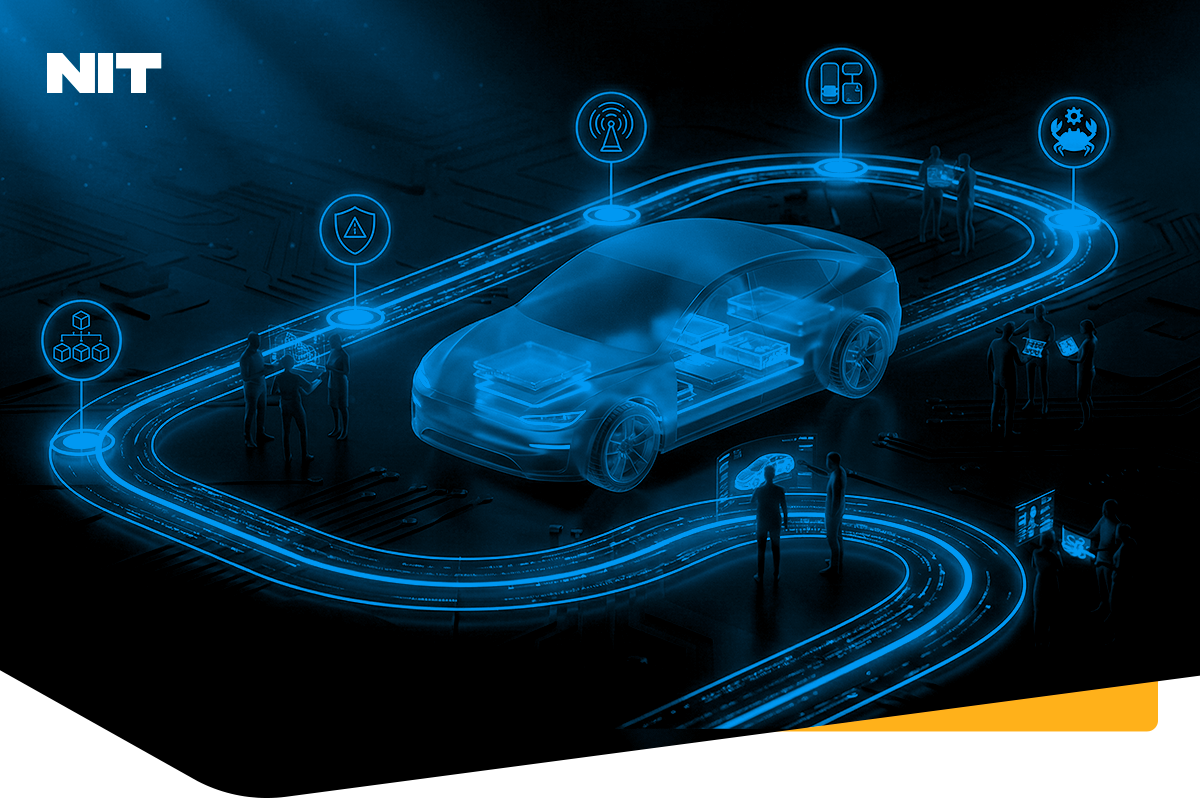
Integrating AI into engineering is no longer considered unusual. It has become part of everyday development processes, influencing how software is designed, verified, and released. Whether in automotive systems or DevOps pipelines, AI can support decision-making, reduce manual effort, and accelerate certain phases of development. However, these improvements require careful and structured application, especially when dealing with safety-critical systems. This is where we at NIT focus our efforts – connecting AI capabilities with established engineering practices.
AI-Assisted Courses Extending Engineering Capabilities
AI-assisted training programs reflect the shift toward the integration of AI into existing engineering workflows. They are designed to demonstrate how AI supports engineering tasks without the need to replace structured thinking, processes, or safety considerations.
Participants in our AI-assisted courses face practical AI scenarios – requirement management, software design, and validation – but they learn how to understand underlying processes, evaluate outputs, and maintain responsibility for final decisions. In these situations, AI is a supporting tool, not a substitute for engineering judgment. To see how this approach is structured in practice, explore our new AI-assisted courses at NIT Academy.

For professionals who come from the engineering world, the idea of AI-assisted courses is a way to improve their knowledge and perfect their skills. For those coming from IT and project management, these courses can turn into a structured point of entry into complex engineering domains. Still, it is important to know that NIT’s programs are not meant for those with no knowledge in the field of programming and engineering – they are not an entry-level course, but an upgrade of your skills and understanding in the area of software development.
AI Ethics, from Principles to Implementation
Since AI is becoming more and more involved in the world of safety and engineering, it is important to learn more about ethical considerations that are shaped by the increased usage of AI. These considerations are no longer abstract and must be applied in practice, so we need to put them into perspective and find a way to use them in practice as often as possible. This is particularly important when dealing with AI tools that support activities like software release approvals, so learning how to implement these principles is a must.
Research that was conducted as part of the AIOLIA Project showed us how safety engineers use AI tools to boost and accelerate approval processes. Moreover, a pattern occurred and showed us an interesting challenge we need to face – AI can reduce manual effort in specific phases, but it also introduces certain risks when it comes to transparency, traceability, and accountability.
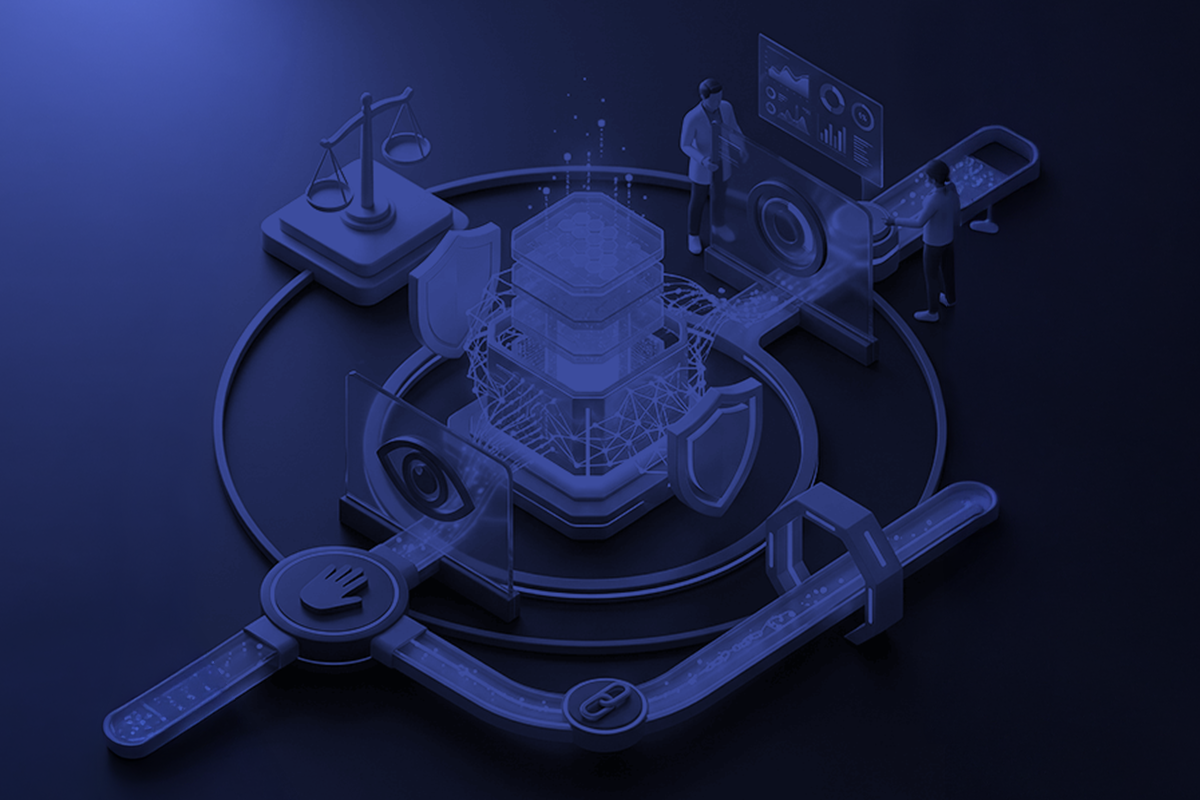
There are a few crucial ethical principles we at NIT look into when dealing with technical and organizational measures, including reliability, explainability, and human oversight. Here is how you can do that as well:
- make sure that AI-generated outputs are traceable and connected to their inputs
- maintain human-in-the-loop review of safety-critical outputs
- define boundaries for automation in critical contexts, and respect those boundaries.
Some of the things we are focusing on include the elimination of batch approvals, safety culture in the organisation (adherence to process, attitude, training, etc.), multi-stakeholder validation, and error injection with report blocking. Also, we are looking into AI quality management systems, bias testing and model auditing, role-based responsibility assignment, user communication and visualisation of model behavior, continuous human-AI performance monitoring and calibration, as well as other important issues.
Even though these concerns look theoretical at first, we try to pay attention to them in practice too. If we fail to do that, we risk coming up with systems that are effective but impossible to validate, as well as with decisions that cannot be justified when the time comes to audit them. To make sure that does not happen, it is always a good idea to maximize the potential of available courses and training sessions, especially if those are focused on AI ethics.
Industry Events Connecting People, AI, and Technology
In addition to training, NIT contributes to shaping how AI is applied in engineering practice. These events provide a platform for discussing both the limitations and practical applications of AI.
For instance, the recent Tech.AD event brought together experts who work in the automotive sector, and they got a chance to talk about software-defined vehicles, their safety in everyday use, and the impact of AI in the development process. Different people offered different insights and shared their experiences, so there were many conclusions that were discussed. However, the participants agreed that, while AI is becoming an increasingly important factor in the engineering workflow, its implementation still requires us to be careful when integrating it with existing safety frameworks.

Another general conclusion of the conference concerned end-to-end autonomous driving and how AI inputs and outputs function with autonomous vehicles. There is a problem with the verification process and ensuring that the available datasets are safe for all drivers, regardless of the inputs used. While some participants offered incomplete solutions that do not give us a chance to verify whether their AI solutions work properly, NIT focuses on the process workflow and blueprints for AI safety. As modern industry increasingly adopts end-to-end AI, we are looking for solutions that are safe, verified, and adequately tested, while safety remains NIT's focus. Creating processes and ready-made blueprints to reach absolutely safe AI, NIT's AI safety is compliant with the ISO/PAS 8800 standard and can help users feel safer when enjoying their autonomous driving experiences.
The theme of our upcoming ZINC Conference is “Outsmarting the Narrative: People, AI, and Technology”, and this topic shows the shift in this industry. This reflects a transition from purely technical discussions toward a broader perspective that includes human, ethical, and organizational aspects. Registrations are now open, and sponsorship packages are available for companies that want to be part of the conversation shaping the future of consumer technologies.
At the same time, NITUP is another event that will allow us to share our knowledge with the whole engineering community, while focusing on practical skills and applications of the AI framework. Planned for April 15 and featuring Rivian as a special guest presenting its R2 electric SUV that will soon be available on the Serbian market, this event is a chance to present new technology, talk about its development, and bring different areas, engineering, management, and research, together to address common engineering challenges.
Aiolia Training as a Step Toward Responsible AI Use
Discovering both practical and theoretical aspects of AI is crucial today, so organizing training sessions within larger events is a crucial step in this process. So, as a part of the ZINC conference framework, Aiolia Training is organized for all those interested in learning more about the ethical considerations of AI and its use in different engineering environments. With the final agenda still being discussed, we know that one of the sessions will feature Prof. Dr. Alexei Grinbaum, Research Director, Chair of the CEA's Digital Ethics Pilot Operational Committee, and a European Commission expert. Also, this event is expected to build on existing research and apply AI in controlled engineering contexts to help the participants of our training reach actionable insights and learn more about using ethical principles in real-world situations. From understanding risks and defining responsibilities to applying structured approaches and mitigating potential issues, the goals of our training sessions are to support engineers who want to learn how to deal with concrete issues and deal with challenges in their everyday work.
Conclusion
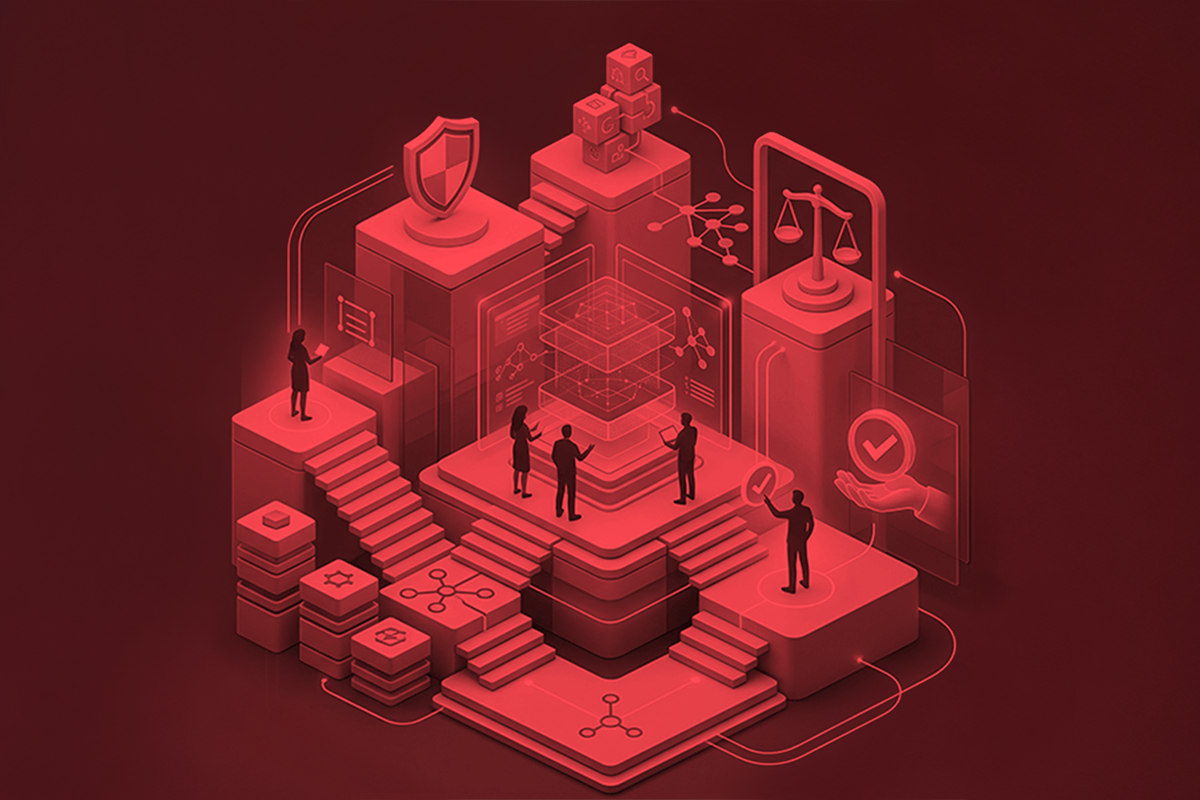
AI is a part of the world of modern engineering, but its effectiveness depends on how it is integrated into existing processes and responsibilities. NIT uses training programs, research, and industry events to give everyone a structured approach and help them understand how to apply AI in engineering practice. So, to develop your understanding of AI in real engineering environments even further, explore these courses and events.
Don’t miss out: registrations are now open for ZINC 2026 and NITUP 2026 – join us to connect with experts, experience the latest AI-driven engineering practices, and shape the future of technology.